





How To Choose the Right Lithium-Ion Forklift Battery
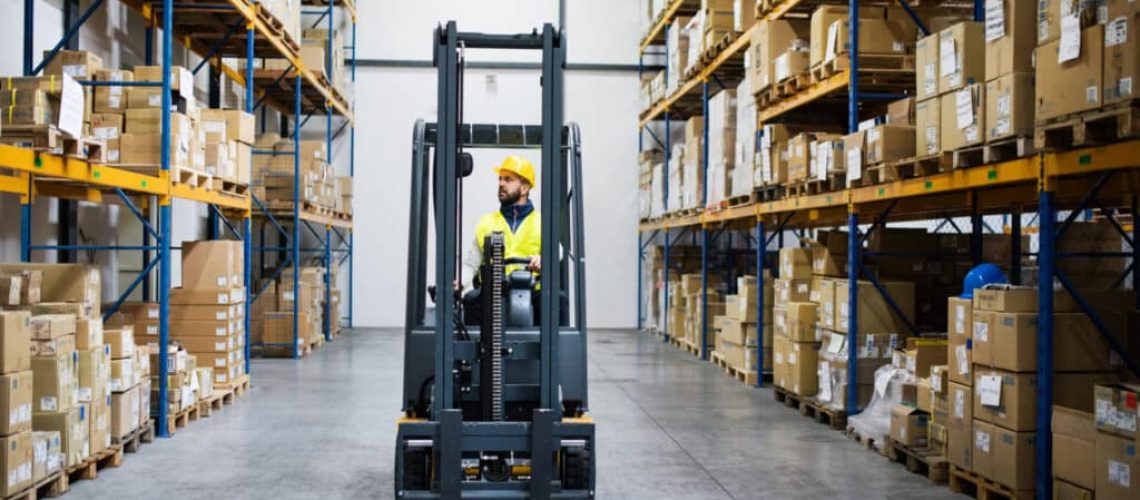
When you need to take a heavy object from one side of the facility to another and store it safely, you need a forklift. Forklifts are the workhorses of warehouses, factories, mills, and more. They provide muscle and mobility, allowing operators to do the work of many people in even less time. But to do that, forklifts need a steady and reliable power source.
There are no better or more portable means of powering a forklift than industrial lithium-ion battery packs. Lithium-ion battery packs are light, rechargeable, powerful, and better for the environment than standard lead-acid batteries. Therefore, they’re the best battery for you and your facility. Before making your purchase, explore this guide on how to choose the right lithium-ion forklift battery.
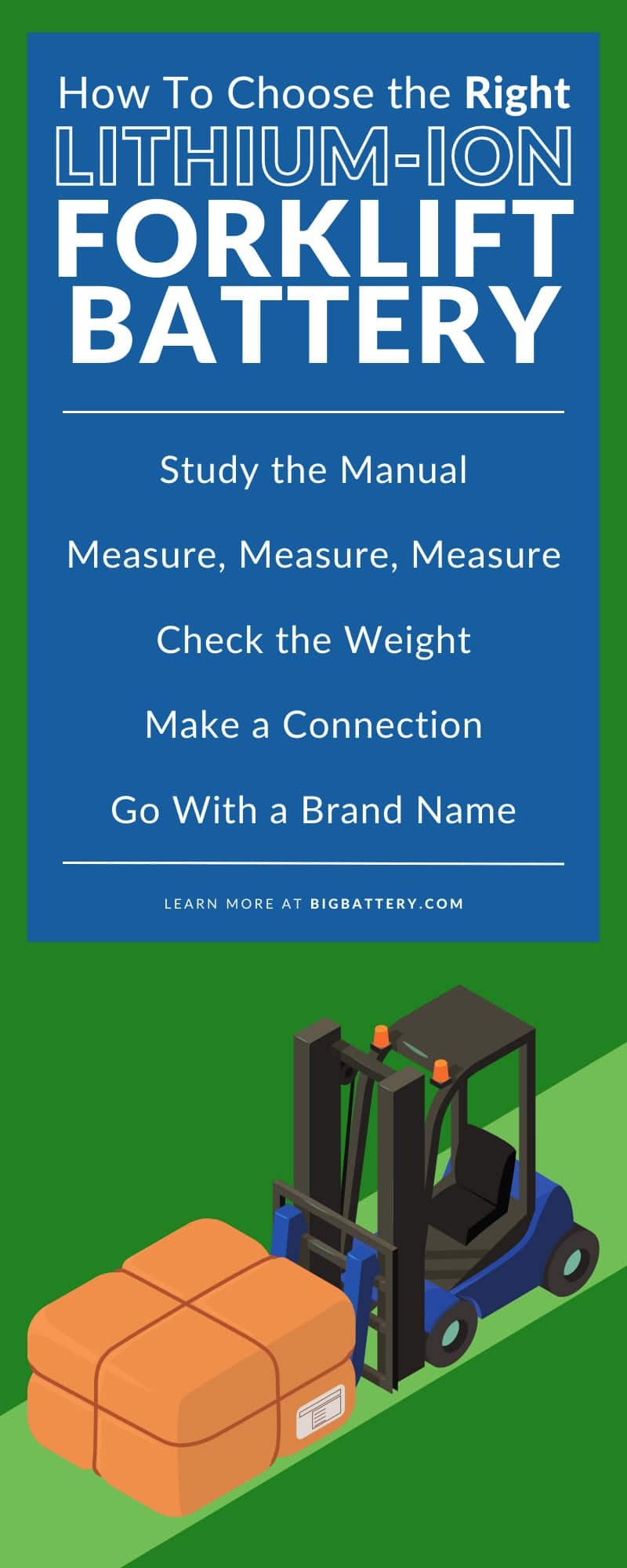
Study the Manual
Ensure you consult the manual before you buy anything. Your forklift’s handbook will contain all the information you need to maintain and equip it, and it will list the specifications and requirements regarding the appropriate battery to use. Take note of your forklift’s power needs: most use either 36-volt or 48-volt batteries. Keep in mind that the wrong voltage has the potential to damage your equipment, either temporarily or permanently. If it’s in the manual, consider it a fact. And if it’s not in the manual, consult with and question the manufacturer.
Measure, Measure, Measure
Even if you know the exact voltage and amperage of the battery you need, be sure that the one you pick will fit. Measure the compartment where the battery sits and take down the height, width, and depth. Most sites recommend not measuring the size of the old battery itself because the lithium-ion battery may have different dimensions.
Check the Weight
Weight is a vital part of your forklift’s ability to do its job. It doesn’t matter how powerful the forklift and its mechanics are if you don’t weight it properly in the back. A lightweight forklift will face everything physics has to offer if it lacks weight in the back. Your battery’s weight serves as part of the forklift’s counterweight. If it’s too light, you risk toppling forward, damaging goods, and putting the lives of the operator and those nearby in danger. Therefore, you must keep things nice and stable by ensuring your new battery can offer the proper poundage.
Make a Connection
Or rather, check the connections. Your new battery needs to properly connect to the engine to provide power. Inspect the battery for connector type, asses where the cables go, and determine how long they need to be. Some experts suggest going with longer cables just in case! Obviously, your forklift will go nowhere if you can’t make a power connection.
Go With a Brand Name
Naturally, we’re biased and think that your best battery is one offered by us here at BigBattery. We have a selection of lithium-ion batteries to power your forklift, recreational vehicle, home emergency power system, and more. Otherwise, always go with a respected brand name and don’t buy from a company not known for making great products.
Online reviews and good word of mouth from those in your industry should put you on the right path to purchasing effective industrial lithium-ion battery packs. As always, you get what you pay for, and cheap rarely means good, especially when heavy material moving equipment is concerned. The fact is that lithium-ion batteries run high in price and may even cost more than the machine itself. But it’s an investment worth making. If you buy a reliable brand-name battery, you know that your forklift will operate at maximum efficiency for years.
How Much Maintenance?
Lithium-ion batteries are better than lead-acid ones for another reason: they require much less maintenance and oversight. Still, know the basics of lithium-ion battery care before you buy one. Familiarize yourself with their upkeep, especially in environments that can affect their performance and ability to charge. You need to keep lithium-ion batteries cool (but not too cool), protected from damage, and away from situations where they can become submerged or otherwise infiltrated by moisture.
Look for a Warranty
If a company doesn’t back up its batteries with a warranty, walk away. Lithium-ion batteries are no small investment. Therefore, ensure that you can replace the battery you buy if it fails to do the job. Also, will they offer any support and assistance in the event of a breakdown or other situation? Battery sellers should be willing to answer your questions and offer suggestions for troubleshooting should things go awry.
Keep It Classy
More specifically, pick the right battery for the class of forklift you’re operating. Electric forklifts come in three classes. Class 1 types are electric motor rider trucks. Class 2 are electric motor narrow aisle trucks. Finally, class 3 are electric motor hand trucks or hand rider trucks. This relates to their voltage, of course, but also their size and weight.
Load, Lift, and Distance
Before buying a battery, consider what you expect your forklift to do daily. Get out the calculator and determine the amount of weight it will handle per job and over time. Think of how high the forklift will lift these weights and how far the vehicle will travel while toting goods and materials.
The bigger the job, the higher the voltage required to power and push the forklift. Also, calculate recharging time and how much output they need to do the job. Err on the side of caution, and imagine workloads growing bigger down the line so that you won’t have to invest in a bigger battery in the future.
Any Questions?
That’s our breakdown of how to choose the right lithium-ion forklift battery. If you have any questions, please contact us by email or phone, and we’ll be happy to answer them. Let us know what you’re looking for, and we can suggest the best possible lithium-ion battery for your forklift or any other vehicles, material handling equipment, and power system setups in your home, office, institution, or other facilities. We look forward to hearing from you!