





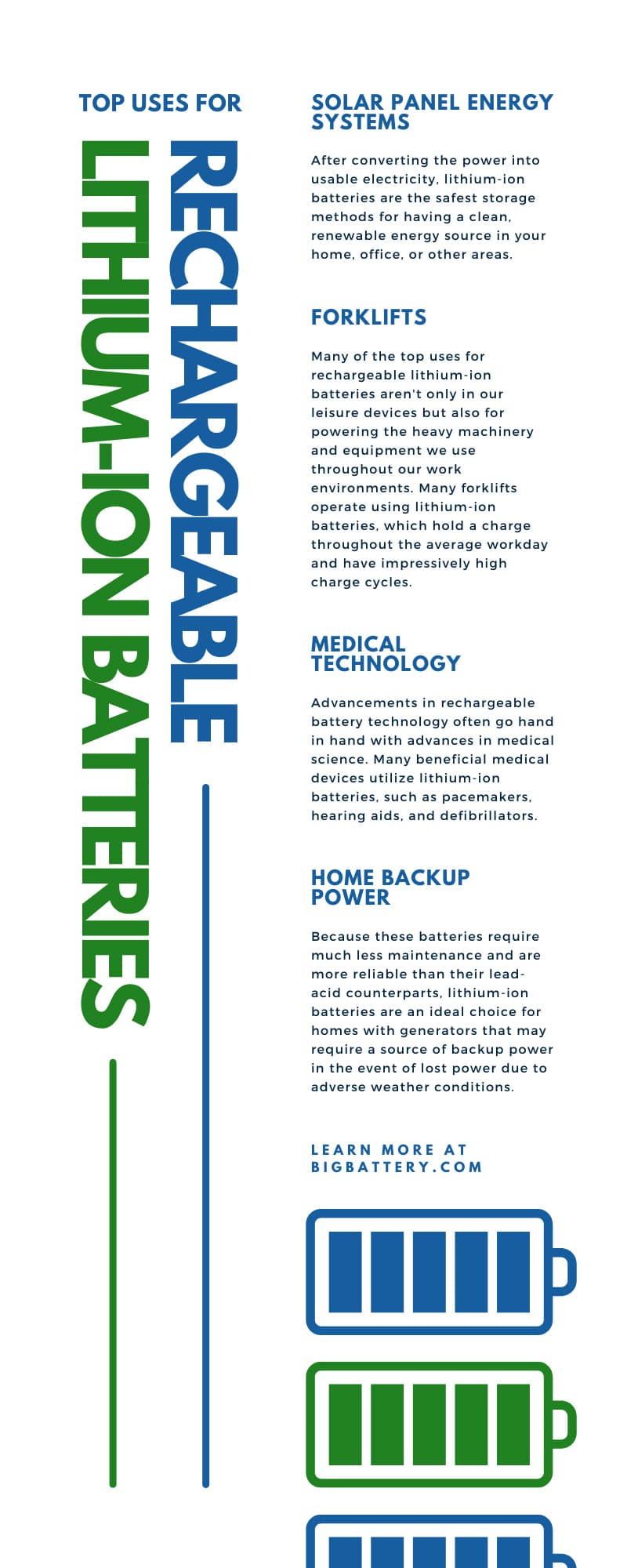
Top Uses for Rechargeable Lithium-Ion Batteries

Since the earliest prototypes of lithium-ion batteries back in the 1980s, these rechargeable battery packs have powered a wide range of consumer and commercial applications, large and small, across the world. Lithium-ion energy storage both is and has powered bold and innovative technology that improves our daily lives. Whether we’re enjoying the modern conveniences of devices that come with these batteries pre-installed or investing in separate packs to charge and power more intensive equipment, here are some of the top uses for rechargeable lithium-ion batteries and how they make things easier.
Solar Energy Systems
Solar power systems are ideal for people looking to live off the grid, those trying to reduce their carbon footprint and lead a more environmentally friendly lifestyle, and homeowners who simply want to be prepared and energy-independent should they need it. When creating a system to draw energy from solar power, you’ll need to install solar panels and a charge controller and inverter to convert that energy into usable power.
After converting your solar energy into usable power, lithium-ion batteries are the safest storage methods for having a clean, renewable energy source at the ready in your home, office, or other residence. Thanks to the long lifespan of lithium-ion batteries and their safe, reliable chemistries, they are an ideal choice for those searching for a more sustainable lifestyle without sacrificing the reliability or availability of their power.
Recreational Vehicles
Lithium-ion batteries are a long-lasting, safe, and dependable choice when you get on the road. Another option for those looking to live off the grid or just for those who love the great outdoors is utilizing lithium-ion batteries in campers, vans or other recreational vehicles. Having a robust, dependable battery system in your RV is always a good idea and allows you to spend that extra time away without worry.
Older lead-acid batteries, which are quite often the stock batteries that come in a new RV, require a lot more maintenance and come with additional risks that can sour a weekend away. Lithium-ion batteries are ideal for those looking to upgrade their vacation vehicles and ensure they’re powering all their amenities the whole trip through.
Golf and Utility Carts
Golf and utility carts are widely used compact vehicles, ideal for spending a day hitting the links, driving around the neighborhood, or assisting you through your workday. While golf carts primarily come stock with lead-acid batteries, many cart owners are making the upgrade to rechargeable lithium batteries in order to charge quicker, drive faster, and go further. When upgrading your cart to lithium-ion, you must ensure that you’re getting the proper voltage batteries for your vehicle. Most carts operate with a 36V or 48V system, but it’s always a good idea to talk to an expert when buying a battery pack to replace your current setup.
Forklifts
The top uses for rechargeable lithium-ion batteries aren’t contained only to our ‘leisure applications’ but also for powering the large machinery and industrial equipment used by businesses, manufacturers, and distributors around the world. One of the most common commercial applications for lithium batteries is warehouse equipment such as floor sweepers and scrubbers, pallet jacks, forklifts, scissor lifts, and much more. Many newer forklifts are entirely electric by default, but still come with outdated lead-acid batteries for their power supply. Upgrading their equipment with lithium-ion batteries has provided warehouses and their teams with increased productivity, efficiency, and lower costs due to their ability to hold a charge throughout the entirety of the workday, be opportunity-charged during breaks if needed, and their impressively long lifespan.
The long-lasting cycle life of lithium-ion allows forklifts equipped with these batteries to remain in workplaces for several years with little maintenance, eliminating the need to swap your lead-acid batteries every 2-3 years or replace machinery.
Many industrial charging stations for lithium-powered forklifts make the process even easier and more straightforward than ever before, allowing for greener and more efficient warehouse and work site operations.
Boats and Watercraft
Just like RVs and golf carts, boats and other watercraft utilize direct current (DC) power to operate. Many boats require a multiple battery setup, with lithium-ion batteries increasingly standing out as the safest and most reliable option for a power supply when out on the water. Lithium’s long lifespan, quick charging, and inherently safe chemistries make it a dependable option for those looking to spend a lengthy amount of time at sea in their sailboat, house boat, yacht, or other marine application.
Medical Technology
Advancements in rechargeable battery technology often go hand in hand with advances in medical science. Many life-saving medical devices utilize lithium-ion batteries, such as pacemakers, hearing aids, and defibrillators.
Another everyday use of lithium-ion batteries in medical technology is in mobility scooters for those who need assistance with transportation or are undergoing physical therapy. Rechargeable batteries in mobility scooters allow for an easy-to-charge method of getting around for those who need it. Lithium-ion batteries provide power from the largest machinery to the smallest medical equipment, allowing for quality health coverage and medical care, all supported by lithium-ion power.
Phones
While much larger and higher-capacity battery packs are used to power industrial equipment and heavy machinery, smaller batteries enrich our daily lives by powering the cell phones we carry with us every day. One of the primary reasons most phones utilize lithium-ion batteries is due to their ability to charge quickly, discharge evenly, and their overall reliability.
Electric Vehicles
In the era of hybrid cars and now fully electric vehicles, it’s more commonplace to find powerful lithium-ion batteries under the hood of newer cars and other EVs. While many electric car batteries once suffered issues related to overheating, shorting out, or unsatisfactory ranges, advancements in technology have made electric cars safer and more dependable than ever. With a strong foundation and dedicated automotive experts behind their design and construction, lithium batteries remain a driving force in the technological growth of the EV industry.
Home Backup Power
Lithium-ion batteries are a vital part of creating a reliable home power system, but that doesn’t mean the capabilities of this technology are reserved only for those with accompanying solar panels. Because these batteries require significantly less maintenance and are more reliable than their lead-acid counterparts, lithium-ion batteries are an ideal choice for homes that require a source of backup power in the event of losing their grid connection due to adverse weather conditions or grid instability.
Whether you live in a region known for heavy rains and hurricanes or regularly scheduled blizzards and snowstorms in the winter, it’s a good idea to have a dependable lithium-ion battery system, as well as an appropriately sized inverter, to serve as your source of power in the event of a blackout or other emergency.
If you have any questions, comments, or concerns about the technology behind lithium-ion batteries, or want to learn more about our large lithium-ion batteries for sale, the friendly and helpful experts at BigBattery have the knowledge you need to discover how this technology can benefit your life and home. Feel free to reach out to us today by phone during regular business hours at (818) 280-3091 or email us anytime at Sales@BigBattery.com.