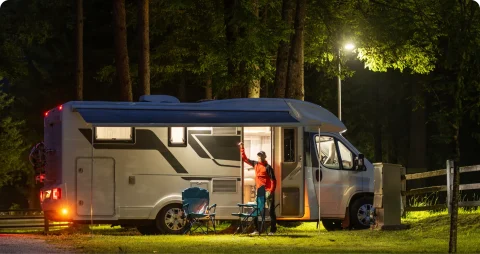








Anyone familiar with the RV lifestyle is familiar with boondocking. For those unfamiliar with the term, boondocking refers to parking your RV without attaching it to any hookups. Sure, there are plenty of water and electrical hookups on a campground, but when you’re out in the woods, you only rely on what your RV can do alone.
It’s good to know how to conserve battery life in an RV when boondocking to ensure you get the most out of your off grid adventures. Here are some helpful tips to preserve your battery power for as long as possible.
Changing Out the Lights
We’re putting this tip at the top because it truly is one of the best adjustments you can make to extend your RV’s power. Standard lightbulbs in many RVs require far more energy than LED bulbs, so swapping out the original bulbs for LEDs is a good start. These new lights drain far less energy, last much longer, and come with the bonus of not generating as much heat inside your RV.
After installing LED lights in the RV, another helpful option is installing a few battery-operated lights that don’t drain your RV’s power at all. Having a few of these lights on hand and some spare batteries puts much less of a drain on your overall system.
Limit Device Charging
Even out in the wilderness, you probably have some devices that need charging. Your phones, tablets, and laptops can drain your RV’s power faster than you think. If you brought a car or truck with you, consider using it to charge your devices. As long as you have spare gas and the battery stays charged, it’s easier to get your phone back to 100% using the car.
However, if you don’t have access to a vehicle where you’re boondocking, another good idea is to have a portable charger on hand. Power banks store a lot of energy to keep your devices charged. Some chargers even have hand cranks if you want to give yourself a workout while you charge your tablet.
Cut Down on Appliances
Appliances are the most significant drain on power when boondocking. Everything uses excessive energy, from the small coffee maker you use in the morning to running the air conditioner to your washer and dryer. Making your food and coffee with a portable propane stove and a percolator comes with the downside of using gas for your power, but can prevent your appliances from draining too much juice.
While most RV fridges operate on propane; they still use some electricity to keep running. You can’t do a whole lot about that, but having an ice chest on hand can limit the amount you use your refrigerator throughout your trip.
Extra Power Sources
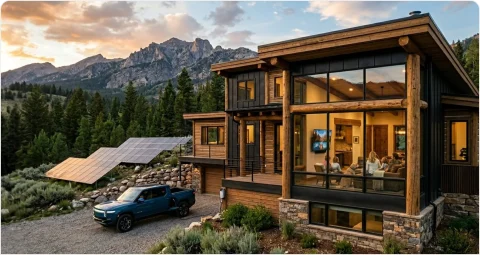
We’ve talked about many ways things can deplete your RV’s power, but what about some of the available methods to extend it? One option people off the grid can utilize to get additional power is by using solar panels. A proper solar panel hookup can be an investment, but it comes with a plethora of bonuses that pay off in the long run.
Solar panels are entirely noiseless and don’t require any source of fuel. If you regularly bring your RV off the grid, the money you save by not buying gas will pay for itself. If you’re truly looking to take the environmental route for your power, make sure your solar panel setup is large enough to support your time boondocking without the need for a gas-powered generator.

The Best Battery Pack
You can reduce the strain on your RV’s battery pack, and you can create a system to recharge it to get additional power. But when it comes to conserving battery life in an RV when boondocking, a crucial part of this setup has the correct battery in your RV from the beginning.
Thankfully, most RVs allow you to install upgrades. A traditional RV battery is fine if you’re using it for a day trip or maybe a weekend if you’re crafty with your usage. Depending on your RV’s carrying capacity, you can install batteries of different sizes and voltages.
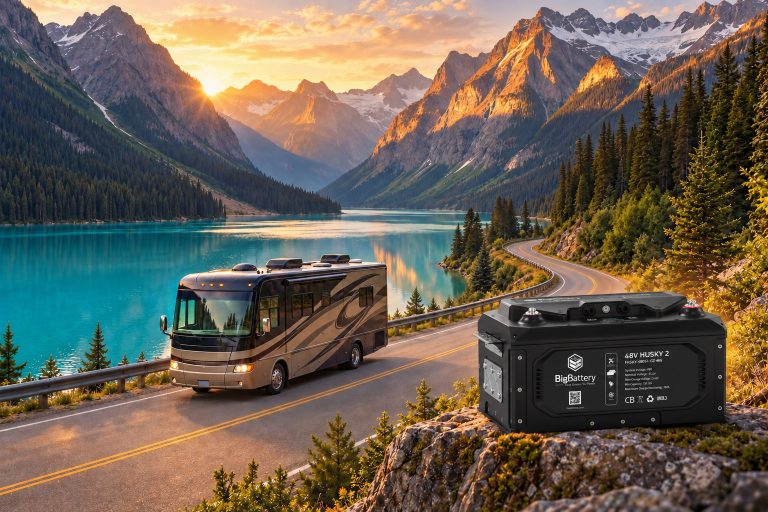
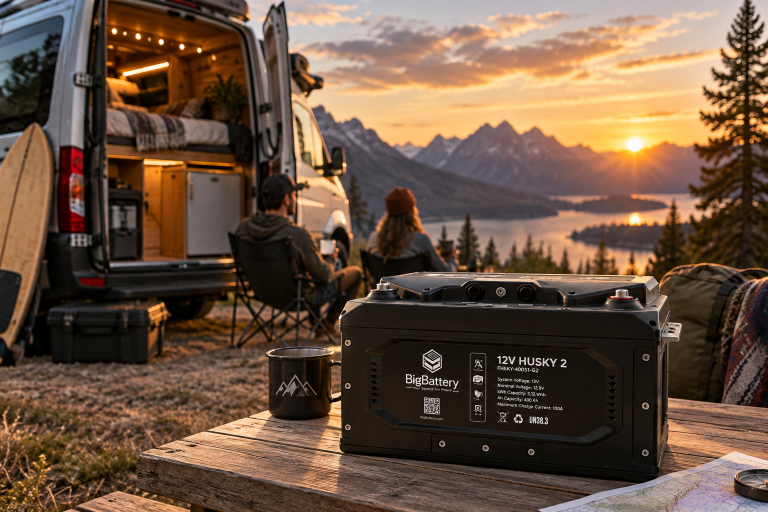
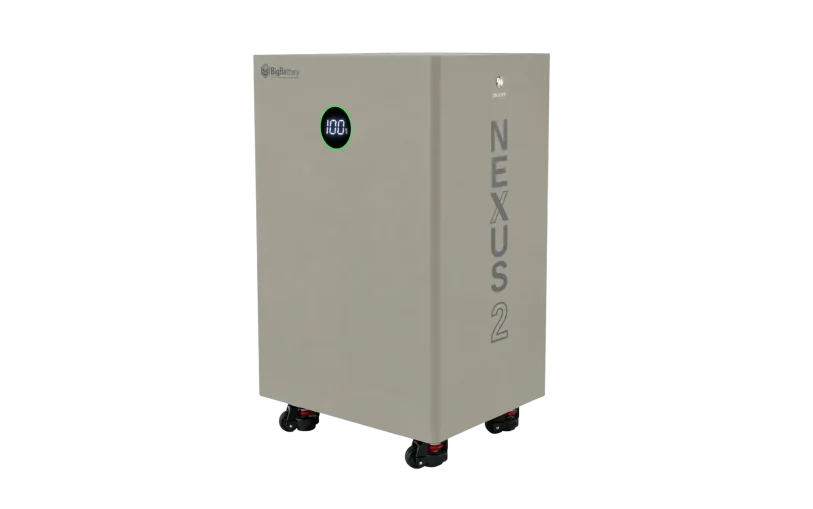
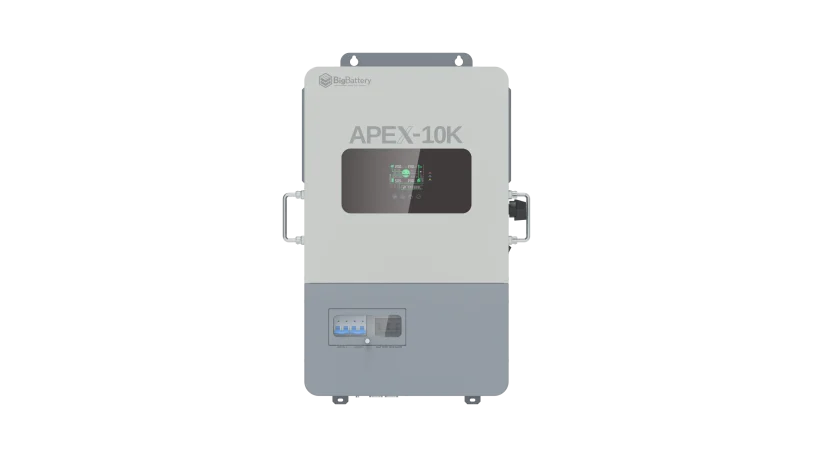
When looking at battery upgrade options for your RV, there are many choices. The top-tier option is to invest in an RV lithium battery pack, like one from BigBattery.com. Lithium-ion batteries are lightweight, easy to manage, quick to charge and last for a very long time. If you take your RV off the grid regularly, it makes sense to upgrade to one of these battery packs sooner rather than later.
Sometimes individuals think that the cost of a LiFePO4 battery is a downside; however, in most cases, the use of the battery over time beats out generators or lead acids many times over. Many RVs come equipped with a more traditional lead-acid battery, typically a flooded-cell battery. While this may be the cheaper option at first, the overall savings from choosing a lithium-ion battery is significant. Depending on your RV’s carrying capacity, getting a few of lead-acid batteries is a good short-term solution but requires more maintenance and replacements in the long run.
While traveling, it’s easy to find rest areas or campgrounds to hook up your RV to a power supply and not worry about conserving power. But when that call for an adventure comes to you, or you’re just not able to find a proper hookup, knowing how to save your power for as long as possible is a vital skill.
Hopefully, this article gave you some helpful information about conserving your battery life while boondocking. For more information about lithium-ion battery packs and other upgrades, you can make to extend the life and quality of your RV, check out BigBattery and browse their wide selection of RV battery options. Give BigBattery a call at (818) 280-3091, or reach us via email at Sales@BigBattery.com.
.
Share on facebook
Facebook
Share on twitter
Twitter
Share on linkedin
LinkedIn
Share on pinterest
Pinterest
Frequently Asked Questions
How long do LiFePO4 batteries last?
A quality LiFePO4 battery can commonly deliver 4,000 or more charge cycles, often roughly 10 years or longer under the right conditions. Depth of discharge, temperature, charge settings, storage habits, and the BMS all affect the result.
How many years is 4,000 cycles?
One full cycle per day is about 11 years. Three cycles per week is more than 25 years on paper, though calendar aging becomes the limit first.
What happens at the end of a LiFePO4 battery's life?
It does not suddenly stop. It loses capacity gradually. A battery rated for 4,000 cycles may be specified to keep around 80% of its original capacity at that point.
Does temperature affect LiFePO4 battery life?
Yes. High heat speeds aging, and charging below freezing can damage cells unless the battery has low-temperature protection or self-heating.
How long does a lithium battery last in an RV?
Many years, when charging sources are configured correctly and the battery is protected from freezing charge conditions. Annual cycles are often fewer than in a daily solar system, but conditions vary more.
How should I store a lithium battery?
Store it at a partial state of charge in a clean, dry, moderate-temperature location. Disconnect parasitic loads and check it periodically per the manufacturer's guidance.