






There are still some intransigent folks out there that are leery of lithium batteries because they’re afraid they aren’t safe.
Those concerns today are largely unfounded, especially when the lithium battery is made with a stable cathode material, and equally importantly, when the battery is managed by a battery management system.
This short post will shed some light on battery management systems; what they are, how they safeguard battery lifespan and performance, and how they improve safety considerably.
Improving Safety and Extending Battery Service Life with a Battery Management System
We need to walk before we can run, and as a result, we need to know what a battery management system is.
Basically, a battery management system, or BMS, is a collective term for technology that manages a rechargeable battery pack.
A battery management system is not “one” device in the sense that a BMS is an interchangeable module. Rather, a BMS is a system that performs a variety of functions, including but not limited to:
- Monitoring the health of the battery.
- Balancing the charge delivered to individual battery cells in the pack.
- Monitoring the temperature of the battery or batteries during charging (and discharge, where applicable).
- Providing a consistent voltage level during charging.
- Protecting the battery.
- Optimizing battery performance based on health, charge level and discharge.
- Providing external reporting so that the health and performance of batteries can be assessed.
As a result of these functions provided by a battery management system, they offer a number of considerable benefits, not the least of which are improved safety and extended battery service lifespan.
Let’s consider safety. Some lithium battery chemistries can experience a phenomenon known as thermal runaway during charging. What happens is the heat generating during charges causes the chemical bonds in the cathode to break down.
The problem is that when these chemical bonds break down, they release more energy, and in the form of heat. As a result, the whole process gets hotter, which is why it’s called thermal runaway. Left unchecked, thermal runaway can be a serious safety concern.
There are two things to consider here, one of which is directly relevant to battery management systems. A BMS will monitor each battery cell during charging as well as the battery’s temperature. If the battery gets too hot, the BMS will adjust charging to cool off the battery pack, preventing thermal runaway.
The other has to do with modern lithium battery chemistry. Many rechargeable lithium batteries are today made with lithium iron phosphate as a cathode material. These are known as LiFePO4 or LFP batteries, and this battery chemistry is much more stable and less likely to experience thermal runaway, especially when governed by a BMS.
Another key item here is that battery management systems, since they monitor the battery packs individual cells with respect to charge level, state, and health, can significantly extend the service lifespan of a battery both by not overcharging a battery’s cells as well as by making sure the charge level stays within the healthy range.
A battery management system can also help ensure optimal battery performance by balancing temperature and load management, ensuring the battery pack delivers at peak performance with minimal operational stresses.
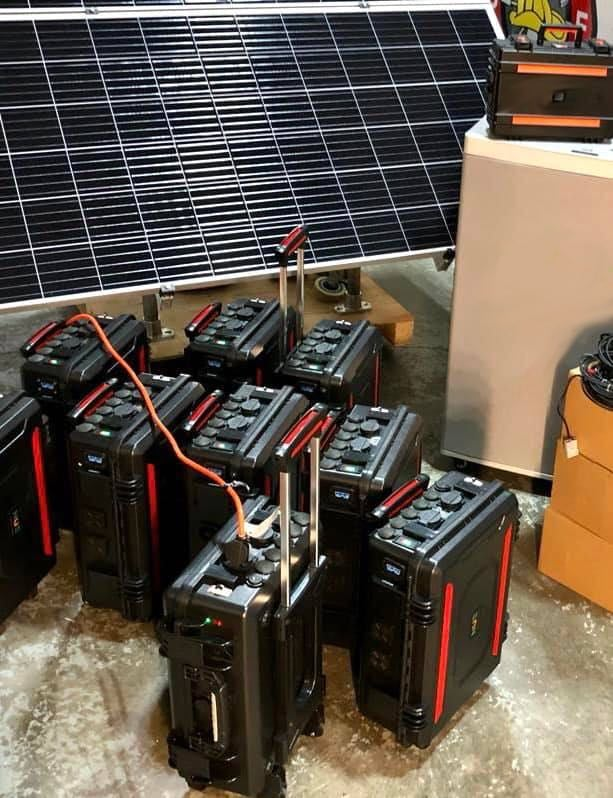
Also related to this is cell management. Over time, and as a battery is charged and discharged through several cycles, the cells may become imbalanced. A battery management system, among other things, helps ensure that the cells are evenly charged and discharged as the battery is under a load, which can ensure optimal performance and longevity.
Cell balancing can be performed either actively or passively, depending on the type of battery management system in question. For instance, a BMS can passively bleed charge from high state of charge cells using bleed resistors, or it can actively rebalance cells by shuttling around energy within the battery’s cells using capacitors and inductors. Regardless of the method used, cell balancing is one of the key ways in which a BMS helps maintain an even charge level along with optimal battery health.
By monitoring voltage, current and temperature during charging and discharging cycles, a BMS can take accurate estimations of state of charge (SOC) and state of health (SOH) among other parameters, and communicate them to external devices.
In this way, a battery management system doesn’t just improve safety, uphold optimal performance, and ensure that the battery lasts longer. It can also help drive down costs associated with maintenance and replacement, making rechargeable lithium batteries even more cost-effective and sustainable compared to other types of batteries.
Want to Learn More About Battery Management Systems? Contact Us!
If you have more specific questions about how a battery management system works, or why a BMS is a necessary component to ensure the health of a rechargeable lithium battery pack, feel free to get in touch with us and we will be more than happy to answer any questions you have.
Frequently Asked Questions
How long do LiFePO4 batteries last?
A quality LiFePO4 battery can commonly deliver 4,000 or more charge cycles, often roughly 10 years or longer under the right conditions. Depth of discharge, temperature, charge settings, storage habits, and the BMS all affect the result.
How many years is 4,000 cycles?
One full cycle per day is about 11 years. Three cycles per week is more than 25 years on paper, though calendar aging becomes the limit first.
What happens at the end of a LiFePO4 battery's life?
It does not suddenly stop. It loses capacity gradually. A battery rated for 4,000 cycles may be specified to keep around 80% of its original capacity at that point.
Does temperature affect LiFePO4 battery life?
Yes. High heat speeds aging, and charging below freezing can damage cells unless the battery has low-temperature protection or self-heating.
How long does a lithium battery last in an RV?
Many years, when charging sources are configured correctly and the battery is protected from freezing charge conditions. Annual cycles are often fewer than in a daily solar system, but conditions vary more.
How should I store a lithium battery?
Store it at a partial state of charge in a clean, dry, moderate-temperature location. Disconnect parasitic loads and check it periodically per the manufacturer's guidance.