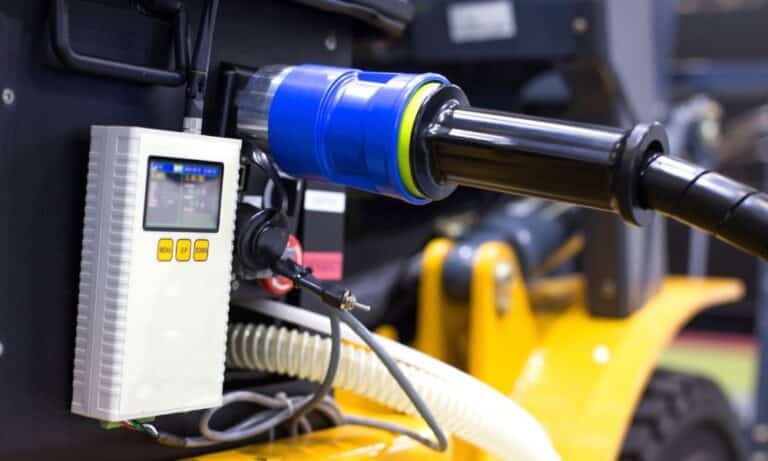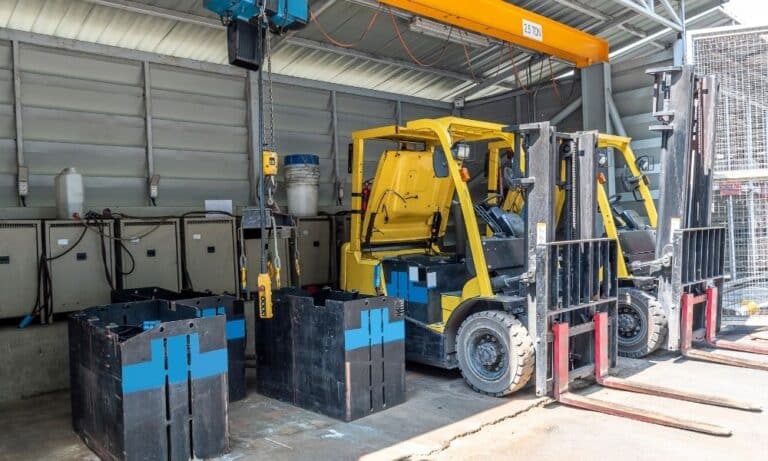




If you work in a warehouse or retail environment with storage facilities, you may need to operate a forklift at some point. Forklifts are great tools for transporting heavy equipment, moving pallets onto high shelves, and unloading freight. Two of the most common battery options for electric forklifts are lithium or lead-acid, but which is better, and how can you decide which is best for your workplace?
Overall Cost
One of the first things companies may consider when deciding on a battery option is the cost. Lead-acid forklift batteries have a much lower initial price, which may make them appealing. However, when you factor in additional costs like replacement fees, maintenance, and increased utility bills due to longer charge times, lead-acid batteries often wind up costing much more in the long run.
Charging Options
When determining whether lithium or lead-acid forklift batteries are better, you’ll want to consider charging speed and efficiency. Lithium batteries are able to be opportunity charged on breaks and shift changes, and can often be fully charged in about three hours, which may make them a better option if you don’t have many forklifts to work with and you need to charge them quickly. Comparatively, lead-acid batteries may take over 10 hours to charge, particularly as they near the end of their lifespan, making them a less impressive option if you keep your forklifts in constant motion throughout a night shift.
Weight and Power
A significant advantage of lithium-ion batteries over their lead-acid counterparts is that lithium-ion batteries are much more compact and lightweight while putting out substantially more power. Having a more energy-dense battery for your forklift allows it to operate more efficiently and carry heavier loads without going over its weight capacity, in part due to the significant weight savings when switching to lithium from lead-acid or other gas-powered alternatives.
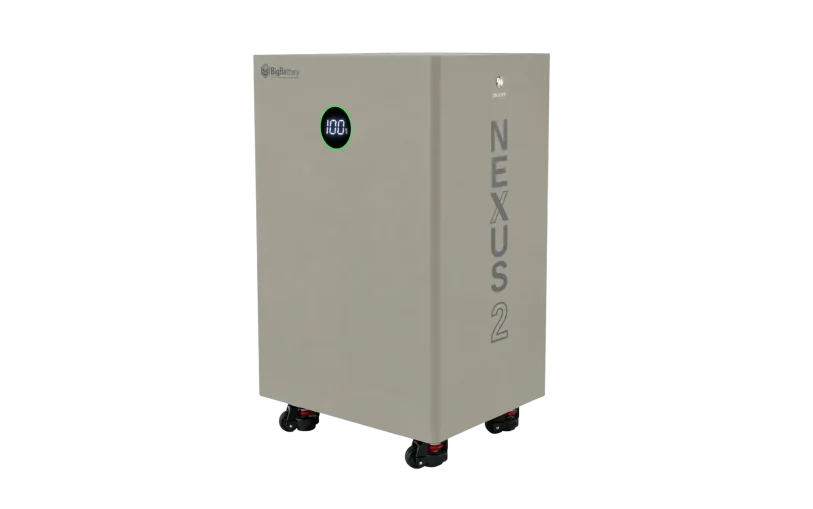
Lead-acid batteries aren’t without their own merits, but many businesses find long-lasting, powerful, and lightweight lithium batteries to be the smarter choice in the long run. If you’re looking for 36-volt, or 48-volt lithium-ion forklift batteries, BigBattery has a wide selection of options for any make and model. We have helpful blog posts on how to get the most out of your electric forklift and make the battery last as long as possible. For more information or if you have any specific questions, feel free to contact us any time, and a member of our staff will provide you with more details.
Share on facebook
Facebook
Share on twitter
Twitter
Share on linkedin
LinkedIn
Share on pinterest
Pinterest
Frequently Asked Questions
How long do LiFePO4 batteries last?
A quality LiFePO4 battery can commonly deliver 4,000 or more charge cycles, often roughly 10 years or longer under the right conditions. Depth of discharge, temperature, charge settings, storage habits, and the BMS all affect the result.
How many years is 4,000 cycles?
One full cycle per day is about 11 years. Three cycles per week is more than 25 years on paper, though calendar aging becomes the limit first.
What happens at the end of a LiFePO4 battery's life?
It does not suddenly stop. It loses capacity gradually. A battery rated for 4,000 cycles may be specified to keep around 80% of its original capacity at that point.
Does temperature affect LiFePO4 battery life?
Yes. High heat speeds aging, and charging below freezing can damage cells unless the battery has low-temperature protection or self-heating.
How long does a lithium battery last in an RV?
Many years, when charging sources are configured correctly and the battery is protected from freezing charge conditions. Annual cycles are often fewer than in a daily solar system, but conditions vary more.
How should I store a lithium battery?
Store it at a partial state of charge in a clean, dry, moderate-temperature location. Disconnect parasitic loads and check it periodically per the manufacturer's guidance.