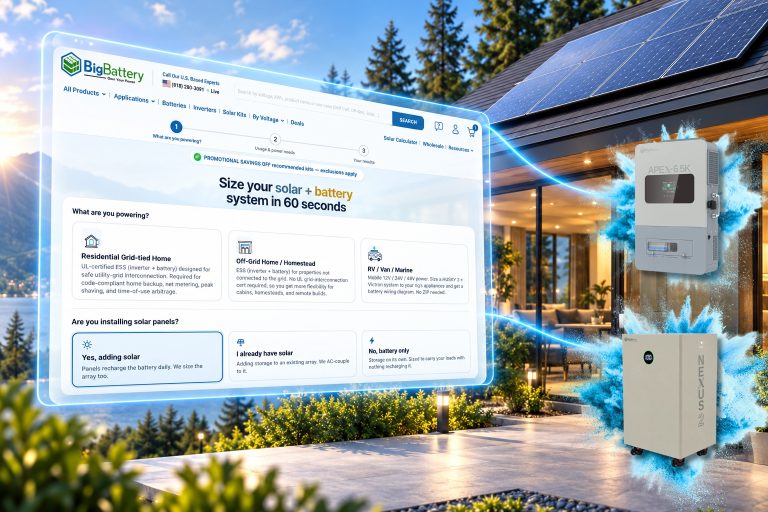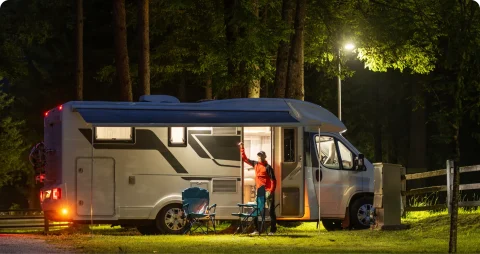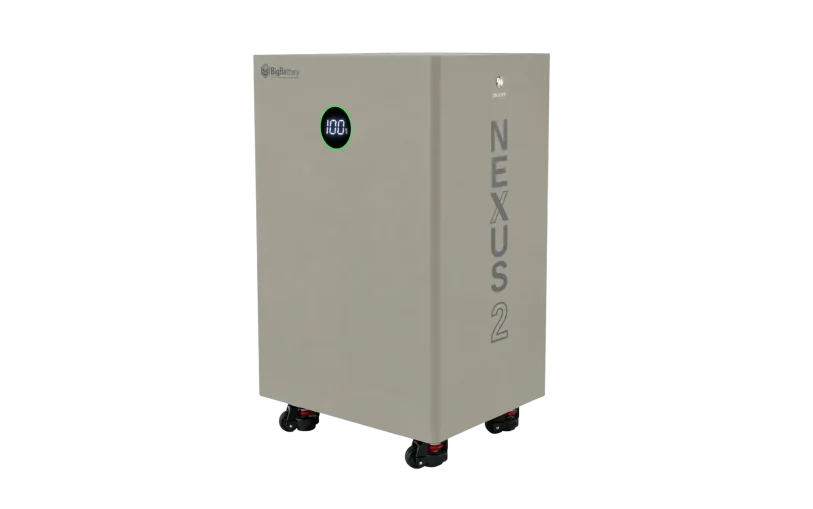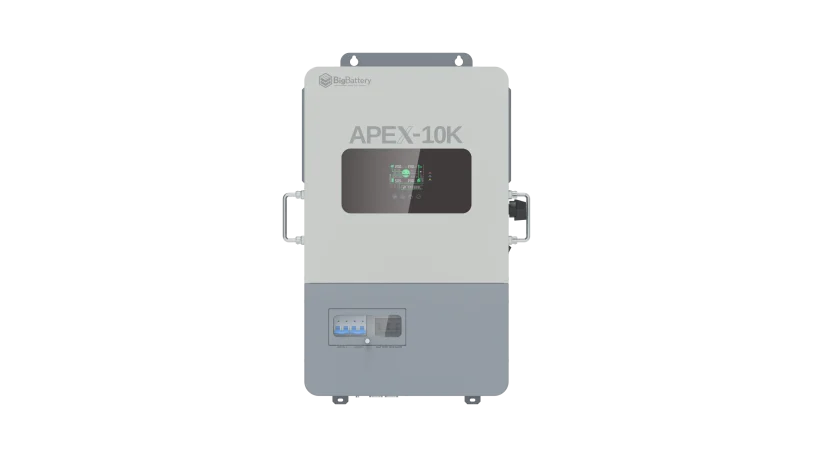




When putting together a solar panel system for your home, commercial office, or industrial worksite, you typically hear about four primary components you’ll need to put it together: solar panels, regulators, inverters, and batteries. You may be wondering why solar panel systems need battery packs and if you can maintain solar energy without them. BigBattery is here to explain the process.
Running With No Battery
The answer to whether a solar panel system can run without a battery is technically yes, but it’s not always the best idea. Running a solar panel system with no battery means that your system isn’t storing any energy to use later.
Without batteries to store excess collected energy, you may still need to connect your power system to the grid, unless you plan only to use electricity while your panels are in contact with sunlight. Plus, some states allow for net metering. This means you can earn credit toward your investment if the energy you earn through your solar panels is greater than what you take from the grid.
Benefits of Batteries
You may still be wondering why solar panel systems need battery packs if you’re able to utilize solar energy without them, and that’s because batteries give you more control over your power. Batteries allow you to store excess energy so you can use it after the sun goes down. When you keep your solar system connected to the power grid, you may not be able to get power during extended outages after a natural disaster or grid instability. Even if your end goal isn’t to live off the grid, having a source of reliable, sustainable backup power is one of the most significant advantages of solar panel systems.
Can You Use Batteries and Power Grids?
Batteries are practically a necessity if you’re looking to generate your own power and still have energy available during prolonged outages. However, many homeowners install batteries with their solar panel systems and still connect to the power grid. If you live in an area with net metering, excess power going beyond the battery’s capacity goes to the power grid and can help earn credit toward your system. This can help reduce your payments.
For more information on batteries for your solar panel system, BigBattery is here to help. We have a wide range of batteries for residential solar, commercial backup power, and off-grid systems to help keep your solar energy flowing. To see which 48-volt lithium solar battery is for you, review our online catalog or browse our blog for guides on running and maintaining your electrical systems with battery power. If you have any additional questions, comments, or concerns, don’t hesitate to contact us anytime, and a member of our team will be happy to assist you.
Facebook
Twitter
LinkedIn
Pinterest
Frequently Asked Questions
How long do LiFePO4 batteries last?
A quality LiFePO4 battery can commonly deliver 4,000 or more charge cycles, often roughly 10 years or longer under the right conditions. Depth of discharge, temperature, charge settings, storage habits, and the BMS all affect the result.
How many years is 4,000 cycles?
One full cycle per day is about 11 years. Three cycles per week is more than 25 years on paper, though calendar aging becomes the limit first.
What happens at the end of a LiFePO4 battery's life?
It does not suddenly stop. It loses capacity gradually. A battery rated for 4,000 cycles may be specified to keep around 80% of its original capacity at that point.
Does temperature affect LiFePO4 battery life?
Yes. High heat speeds aging, and charging below freezing can damage cells unless the battery has low-temperature protection or self-heating.
How long does a lithium battery last in an RV?
Many years, when charging sources are configured correctly and the battery is protected from freezing charge conditions. Annual cycles are often fewer than in a daily solar system, but conditions vary more.
How should I store a lithium battery?
Store it at a partial state of charge in a clean, dry, moderate-temperature location. Disconnect parasitic loads and check it periodically per the manufacturer's guidance.