



A home battery that is too small runs out before the outage ends. One that is too large costs more than it needs to and may never fully recharge. Sizing it correctly means starting with what you need to keep running, not with a battery model.
This guide walks through the steps: list your essential loads, convert them to kWh, choose the days of backup you want, check the inverter, and plan the solar recharge.
To size home battery storage for solar, list the loads you want on during an outage, add up their daily kWh, multiply by the days of backup you want, and divide by usable capacity, 80% to 90% for LiFePO4. Then check the inverter’s continuous and surge power. Twelve kWh per day for one day at 85% needs about 14.1 kWh, so a 15 kWh battery is a sensible starting point.
Browse our page: Home Batteries by kWh.
How to Size Home Battery Capacity in kWh
Use this formula:
Daily kWh × days of backup ÷ usable battery percentage = nominal kWh
Daily kWh is the energy your chosen loads use in 24 hours. Days of backup is how long you want to ride out an outage without help from the grid. Usable battery percentage is how much of the battery you can safely use, which is 80% to 90% for LiFePO4. This guide uses 85%.
For example, 12 kWh per day for two days is 24 kWh of use. Divided by 0.85, that is about 28.2 kWh of nominal storage.
Lithium Battery Size by Daily Use and Days of Backup
Nominal capacity at 85% usable capacity, no solar recharge.
| Daily energy use | 1 day | 2 days | 3 days |
|---|---|---|---|
| 6 kWh | 7.1 kWh | 14.1 kWh | 21.2 kWh |
| 12 kWh | 14.1 kWh | 28.2 kWh | 42.4 kWh |
| 18 kWh | 21.2 kWh | 42.4 kWh | 63.5 kWh |
Usable capacity is why lithium sizes smaller than lead acid. Compared with lead-acid batteries, which are typically held to about 50% depth of discharge, LiFePO4 lets you use most of what you buy. Draining any battery to zero is still a bad idea, so keep the usable percentage in your math.
Essential Loads and Typical Daily Use
List only what you need during an outage. These are typical ranges. Check nameplates for your own equipment and estimate hours of use.
| Load | Low (kWh/day) | High (kWh/day) | What drives the range |
|---|---|---|---|
| Refrigerator | 1.2 | 2.0 | Age, size, door openings |
| LED lighting | 0.5 | 1.5 | Number of rooms and hours on |
| Router and modem | 0.3 | 0.5 | Equipment and extra devices |
| Microwave | 0.25 | 0.5 | Minutes of use per day |
| TV, laptops, phone charging | 0.4 | 2.0 | Number of devices and hours |
| Furnace blower | 0.4 | 3.0 | Climate and run time |
| Well pump | 0.35 | 3.0 | Pump size and water use |
| Total | 3.4 | 12.5 |
Running every load in this table would use about 3.4 to 12.5 kWh per day, or about 4.0 to 14.7 kWh of nominal capacity at 85% usable. The Solar Battery Sizing Calculator can run your own load list.
Capacity Is Only Half the Equation: Check Power and Surge
A battery stores energy. The inverter decides how fast you can use it. Two numbers matter:
- Continuous power (kW): the total of all loads running at the same time.
- Surge power: the brief spike when motors start, such as a refrigerator compressor, well pump, or furnace blower.
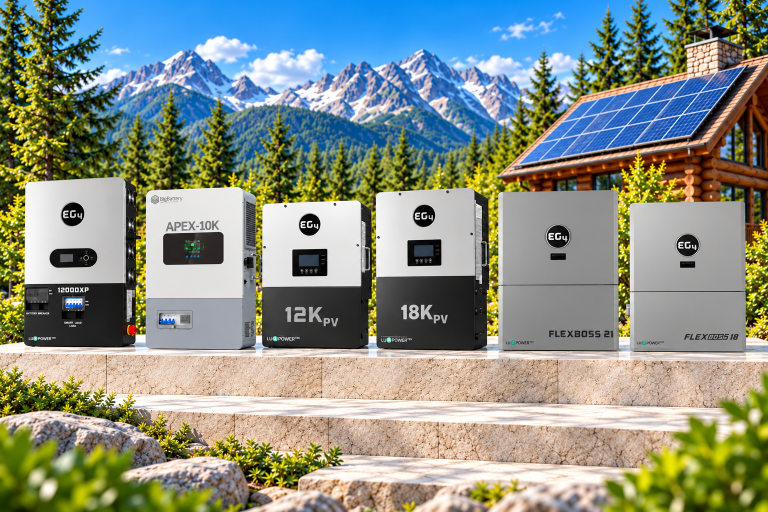
A battery with plenty of kWh still cannot start a well pump if the inverter cannot supply the surge. Your inverter must support both numbers, and the battery must be able to deliver that current. See BigBattery’s inverters for options. If your loads exceed the inverter’s rating, the fix is a larger inverter or leaving certain circuits off backup.
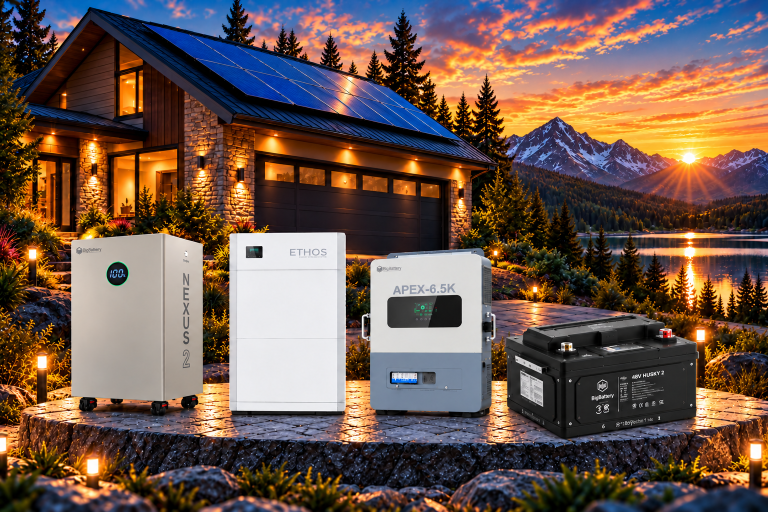
BigBattery’s lithium solar batteries range from 5 to 20 kWh at 48V. These examples show how kWh and kW pair up for home battery backup with solar, and for a whole house solar system with battery backup.
Example Home Battery Systems
| System | Energy | Inverter power | Use |
|---|---|---|---|
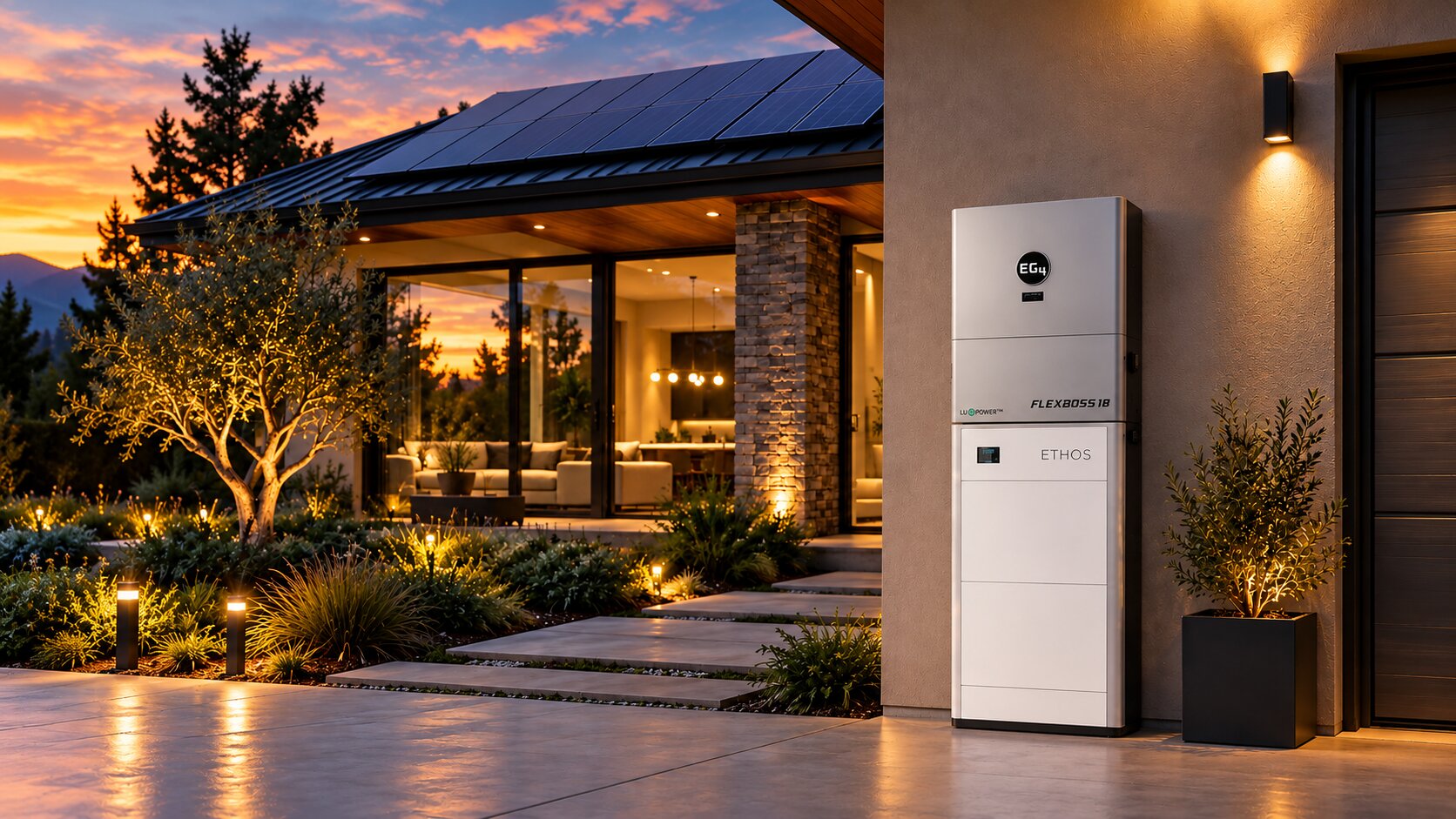
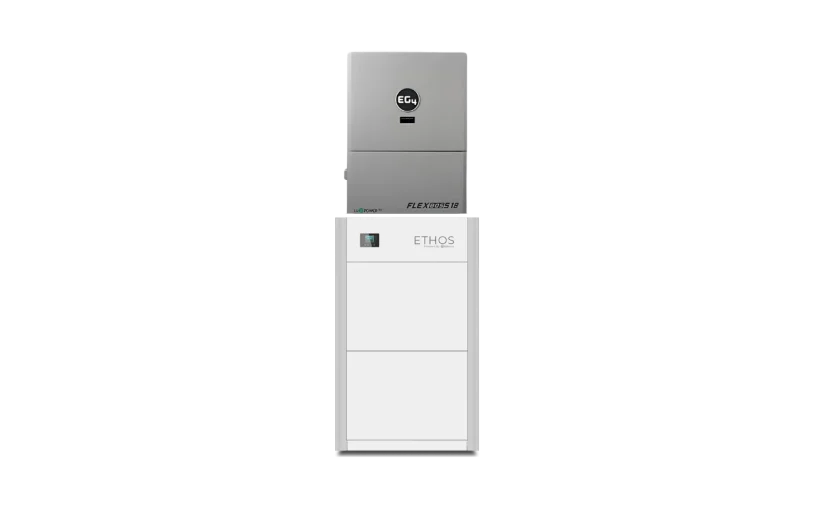
| ETHOS + FlexBOSS18 | 10.24 kWh | 12 kW | Grid-tied backup |
| EG4 314Ah Indoor + FlexBOSS18 | 16 kWh | 12 kW | Grid-tied backup |
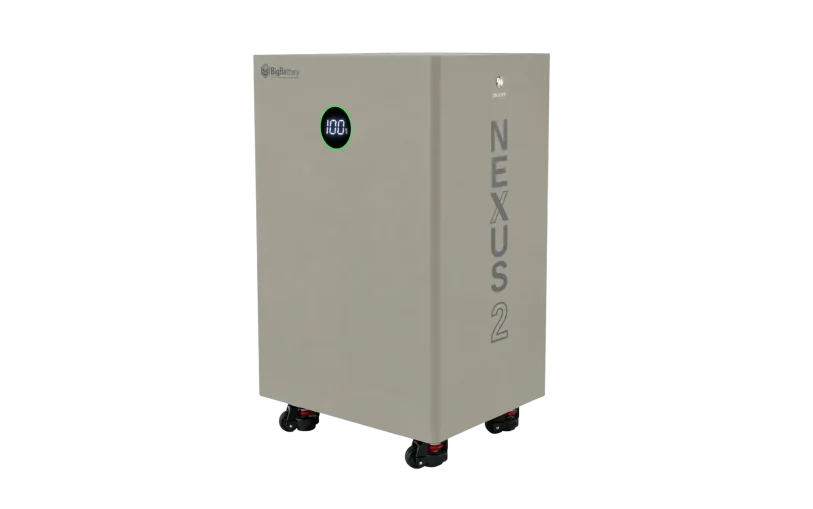
| NEXUS 2 + EG4 6000XP | 16.1 kWh | 6 kW | Off-grid |
Review the product page and manual for each system before you buy. Specs and manuals are in Product documents.
Factor in Solar Recharge and Weather Reality
A battery only helps for as long as it holds charge. If the outage lasts longer than your backup days, solar has to refill it. To estimate the array you need:
Daily kWh ÷ peak sun hours ÷ system efficiency = array size in kW
For example, 12 kWh per day with 4 peak sun hours and 90% system efficiency needs about 3.3 kW of solar. Peak sun hours vary by location and season, and winter and storm days can cut production sharply. Size the array for the weather you are most likely to lose power in, not for a clear summer day.
Grid-tied homes can lean on the grid between outages and recharge from solar when the sun is out. Off-grid homes have no fallback, so they need more battery, more solar, and often a generator input. For a full cabin walkthrough, see How to Size an Off Grid Cabin Battery System. For backup-focused advice, see How to Find the Best Battery for Solar Backup.
Choose Voltage and Leave Room to Expand
Most home systems use a 48V architecture. Higher voltage means lower current for the same power, so you can use thinner cable and lose less energy to heat. At 6 kW, a 12V system pulls about 500A, and a 48V system pulls about 125A.
Needs grow. You may add an EV, a heat pump, or a workshop. When you size a battery bank for home solar, confirm the maximum number of modules the system supports. BigBattery lists the NEXUS 2 as expandable to 15 units. Also check that the inverter, charge controller, and communications can handle the larger bank.
Do Not Size From Amp-Hours Alone
Amp-hours only describe capacity at a given voltage. Two batteries with the same Ah can store very different amounts of energy. Convert to kWh before you compare:
Nominal volts × amp-hours = watt-hours. Divide watt-hours by 1,000 to get kWh.
LiFePO4 batteries run at 12.8V nominal for 12V and 51.2V nominal for 48V. A 100Ah battery at 12V stores about 1.28 kWh, while a 100Ah battery at 48V stores about 5.12 kWh.
Get Help Sizing Your Home Battery
BigBattery’s Texas-based experts can turn your load list into a system plan built for your home. Compare home batteries by kWh, run your loads through the Solar Battery Sizing Calculator, or call (818) 280-3091.
Frequently Asked Questions
How big should a solar battery for power outage backup be?
Multiply the daily kWh of the loads you want on by the days of backup, then divide by usable capacity. Twelve kWh per day for one day at 85% needs about 14.1 kWh. A solar battery backup for power outages should also pair with an inverter that covers your continuous and surge loads.
How many kWh do I need to back up essential loads?
Essential-load backup, covering refrigeration, internet, lights, outlets, a furnace blower, and a well pump, often lands between roughly 10 and 20 kWh. Whole-home backup with HVAC, electric cooking, and dryers is much larger.
What size inverter do I need for home battery backup?
Add up the loads that run at the same time for your continuous power, then allow for motor-starting surges. A 15 kWh battery may pair with a 6 kW or 8 kW inverter for essential loads.
How many days of backup should I plan for?
One day can suit a neighborhood with short, infrequent outages. Two or three days may be worth it for a rural property with vulnerable power lines or frequent storms.
How do I convert amp-hours to kWh?
Multiply nominal volts by amp-hours to get watt-hours, then divide by 1,000. A 100Ah battery at 51.2V stores about 5.12 kWh.
Can I add more batteries later?
Often yes, with modular LiFePO4 batteries, if the inverter, charge controller, communications, and protection equipment were chosen with expansion in mind. Avoid mixing chemistries or mismatched modules unless the manufacturer supports it.